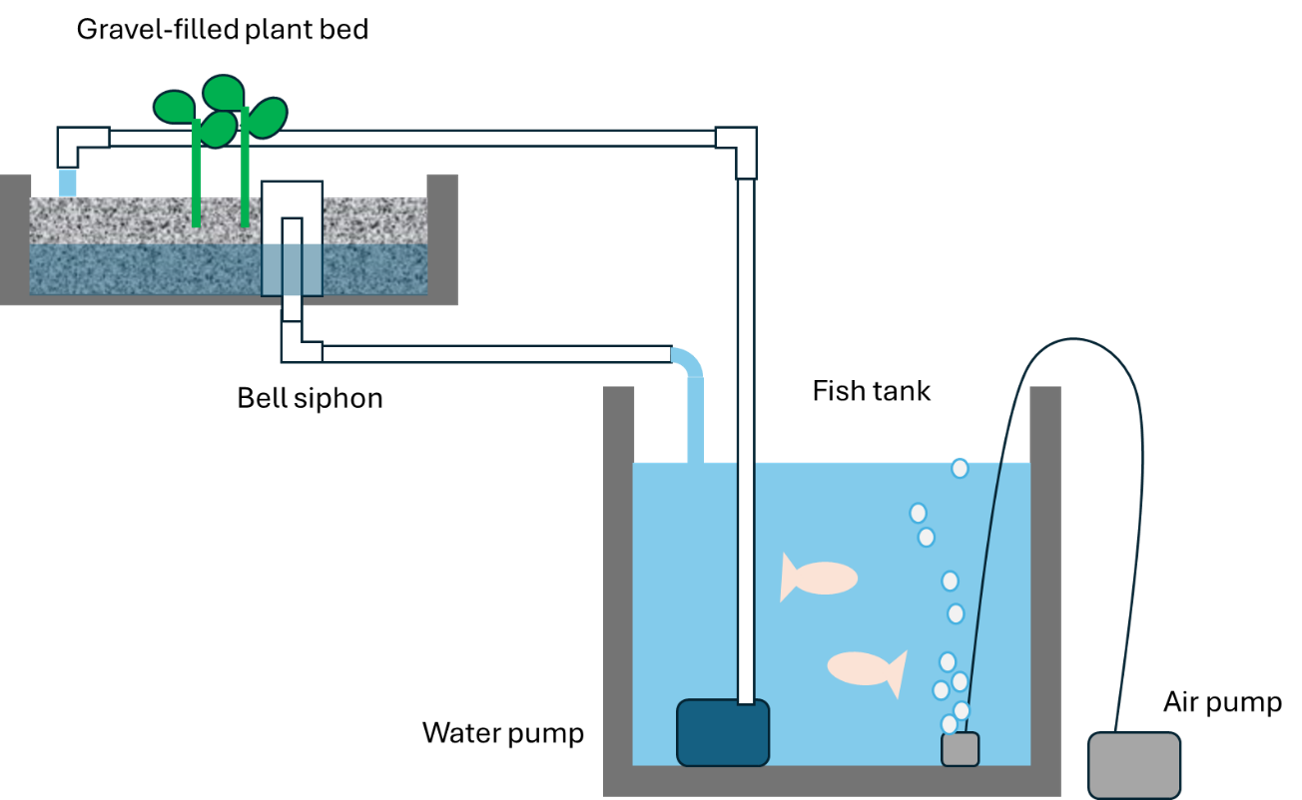
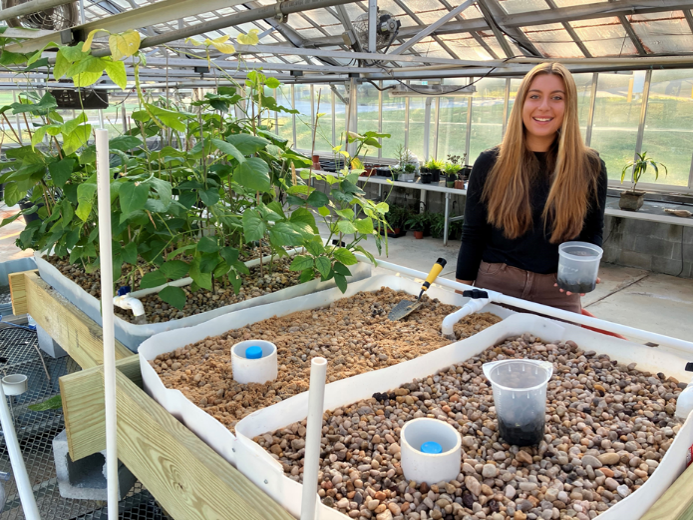
If you want a cheap, sturdy fish tank and grow bed, it’s hard to beat an IBC tote.
What’s an IBC tote?
IBC stands for intermediate bulk container. They’re big plastic tanks inside a metal cage, used to ship liquids all over the world. The most common size holds about 275 gallons, and used ones are usually easy to find at a reasonable price.
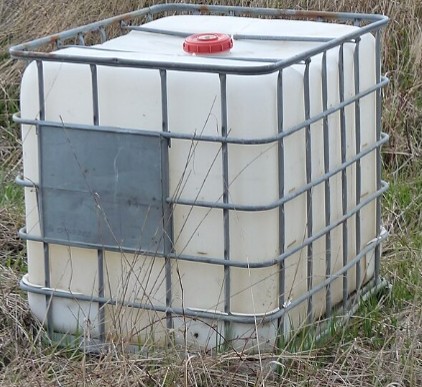
Buy the right one
Make sure it’s food-grade, meaning it was originally used to ship food products. Then clean it well before you use it.
One tote, two parts
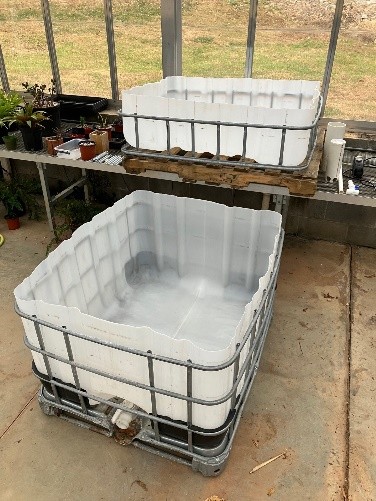
In the simplest setup, you cut the top off the tote. The bottom becomes your fish tank, still sitting in its metal cage. The top becomes your grow bed, held by the cut-off top section of the cage.
Keep the cage
These plastic tanks can’t hold their shape on their own once they’re full of water. The metal cage is what holds them together. If you don’t have the cage, you’ll need to build some other kind of support.
know the weight
A tank holding 200 gallons of water weighs about 1,650 lb. The grow bed is smaller, but filled with gravel and water it can weigh 660 lb or more. Pick your spot before you fill anything, because you won’t want to be moving it later.
Build a solid stand
The grow bed needs to sit higher than the fish tank so water can drain back down. Stack cement blocks and set a wooden pallet on top to make a stand. Put a pallet under the fish tank too if the ground needs it.
Don’t stack the bed on the tank
Some people mount the grow bed right on top of the fish tank to save space. We don’t recommend it. It makes the tank really hard to get into for feeding, cleaning, and harvesting.
Want more growing space?
One fish tank can support two grow beds. Just add a second tote for the second bed, and a second siphon.
Get the full handout
This article is adapted from Simple Backyard Aquaponics System by Dr. Bill Lovegrove. Download the full handout below, or read it online.
Up next
Where Siphona started: a backyard system built to feed families
How a 2023 Bob Jones University class project to feed families became the starting point for Siphona.
Adapted with permission from Simple Backyard Aquaponics System by Dr. Bill Lovegrove, Bob Jones University.