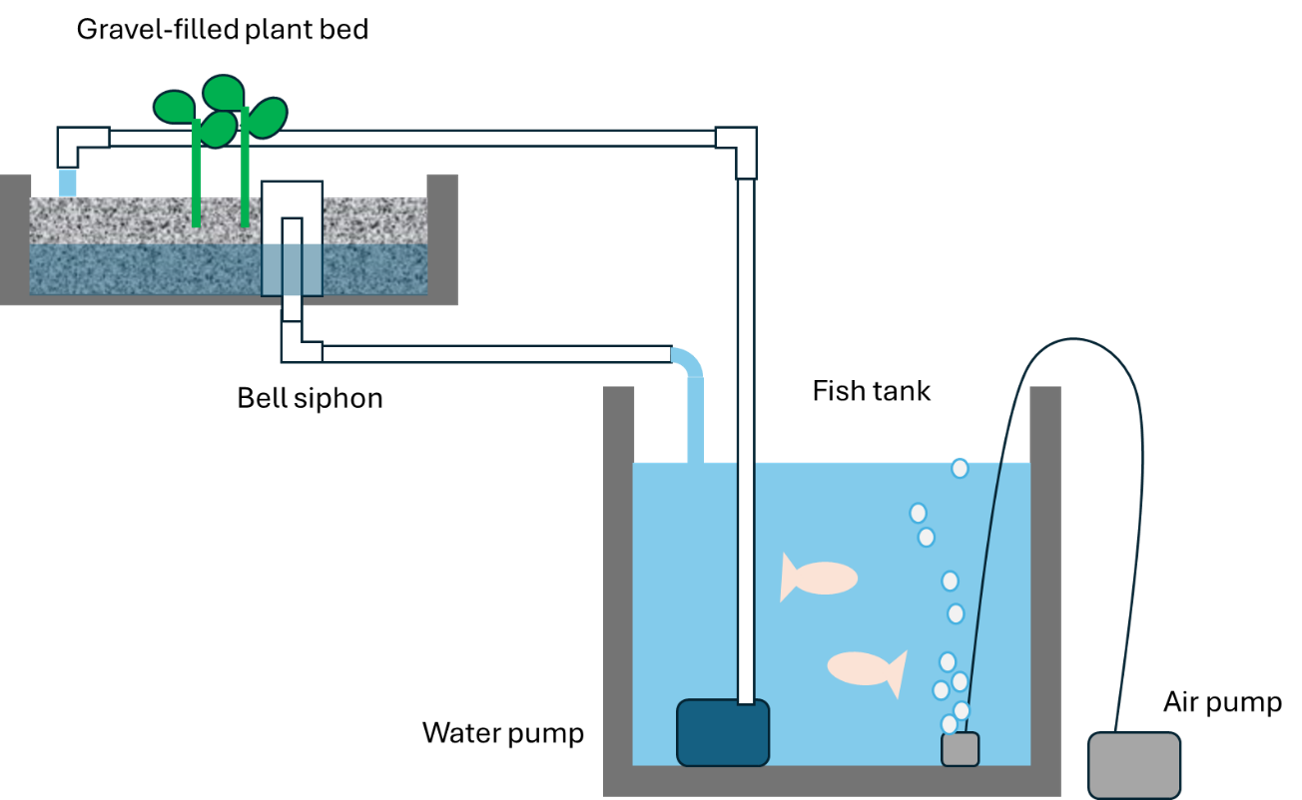
The bell siphon is a small part that does a big job. It makes your grow bed fill up and drain on its own, over and over, all day long. No timer, no electricity, no moving parts.
The cycle
- Fill. Your pump sends a slow, steady trickle of water into the grow bed. The water level rises through the gravel.
- Trigger. When the water reaches the top of the siphon, it starts siphoning and pulls water out of the bed fast.
- Drain. The bed empties back into the fish tank. Once it’s low enough, air gets into the siphon, the siphon breaks, and the bed starts filling again.
The whole cycle usually takes just a few minutes.
Why flood and drain matters
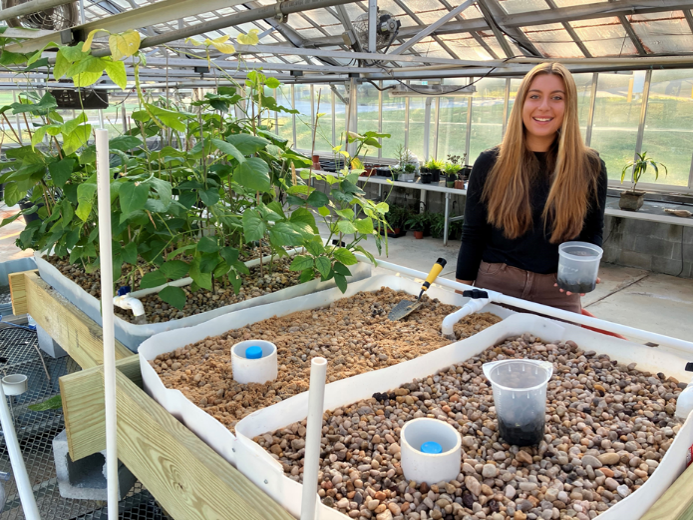
A good grow bed ends up with three zones. Each cycle brings in water and nutrients, and each drain pulls fresh air down to the roots.
| Top inch or so | Always dry |
| Middle | Floods and drains every cycle. Most roots grow here. |
| Bottom inch or so | Always underwater |
Why siphons get stuck
Here’s the catch with a standard bell siphon: it only works when the water coming in is in the right range. If the flow is too slow, the bed fills but never triggers. If it’s too fast, the siphon never shuts off and the bed never fills back up.
Your flow rate can also drift. As your pump filter gets dirty, the flow drops, so a siphon that worked fine yesterday can stall today. That’s why it pays to check on it and clean your pump filter every few days.
Quick fixes
Bed fills but never drains?
Open your pump valve a little.
Bed keeps draining and never refills?
Close your pump valve a little.
Worked fine, then stopped?
Clean your pump filter.
Siphona Double Bell Siphon
Skip the trial and error
Getting a homemade siphon to cycle reliably takes a lot of fiddling. The Siphona Double Bell Siphon, currently in prototype testing, is being designed to drop right in. More on what the double bell design improves, backed by our test data, is coming soon.
Up next
Building a backyard aquaponics system from IBC totes
The cheapest, sturdiest way to build a fish tank and grow bed.
Adapted with permission from Simple Backyard Aquaponics System by Dr. Bill Lovegrove, Bob Jones University.